Image: created with ChatGPT / OpenAI image generation
Overall structure
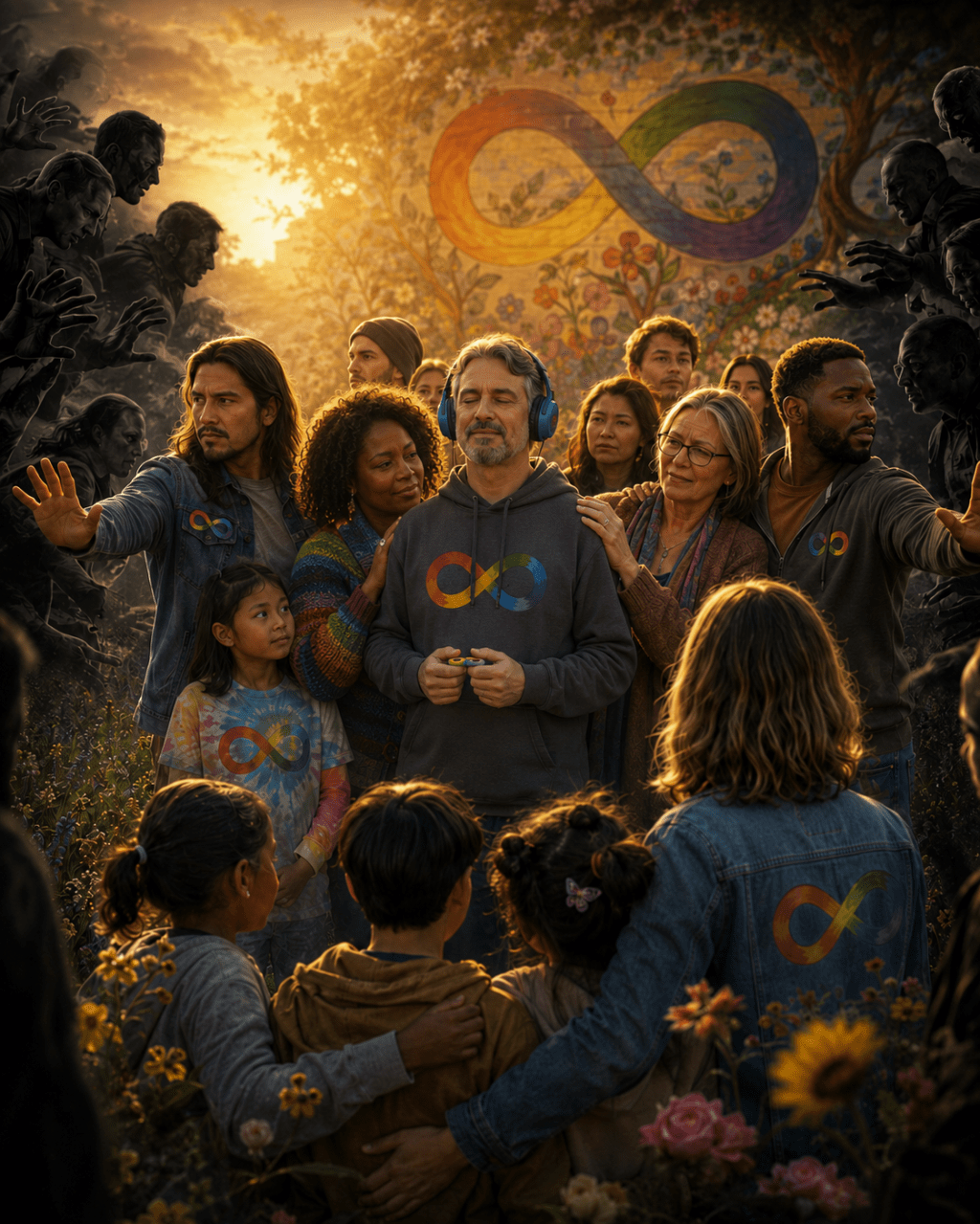
The image is built like a protective circle or human shield. At the centre stands a calm, middle-aged autistic man, visually separated from the surrounding tension by warm light and the closeness of the people around him. He is not shown as helpless or tragic; he is composed, dignified, and quietly present.
The supportive figures form a ring around him. Some place hands gently on his shoulders, while others face outward with raised palms, physically blocking the darker figures at the edges. This creates a strong contrast between the illuminated centre and the threatening margins.
The composition leads the eye inward: from the dark figures on both sides, through the protective community, to the central man, and then upward to the large rainbow infinity symbol in the background.
Symbolism
The central man’s headphones and fidget object suggest sensory difference and self-regulation without reducing him to those traits. They are presented naturally, as part of his way of being in the world.
The rainbow infinity symbol represents neurodiversity, continuity, and acceptance. Its placement above the group gives it an almost mural-like or sacred quality, as though the community’s values are literally painted into the environment.
The shadowy figures at the edges symbolize intolerance, judgement, social pressure, and hostility. They are not individualized; they appear more like forces or attitudes than specific people. This makes the protest feel broader and more universal.
Flowers, sunlight, and warm colour symbolize hope, growth, gentleness, and life. The image resists portraying protest only as conflict; it frames resistance as care.
Techniques
The image uses chiaroscuro: strong contrast between darkness and light. The hostile figures are rendered in grey-black tones, while the central group is bathed in gold and colour. This immediately tells the viewer where the emotional and moral warmth lies.
The circular arrangement of bodies creates visual protection. Hands on shoulders, linked arms, and outward-facing palms turn body language into the protest itself, replacing written slogans with gesture.
Colour is used emotionally. Rainbow tones appear in clothing, patches, the mural, and the infinity motif, while the oppressive figures are drained of colour. This makes acceptance feel vivid and alive, while intolerance feels cold and lifeless.
The central figure’s closed eyes and still posture create a moment of quiet within a charged scene. That stillness is important: the image is not asking him to perform distress for the viewer. It lets him exist with dignity.
Meaning
The image portrays protest not as shouting, but as collective protection. It says that autism intolerance is not answered only by argument, but by community, witness, and refusal to let someone be diminished.
By making the autistic person a 50-year-old man, the image also pushes against the common tendency to represent autism only through children. It acknowledges autistic adulthood, maturity, complexity, and continued need for acceptance.
The strongest message is that the central man does not need to change to be worthy of safety. The world around him must change. The community’s role is not to speak over him, but to stand with him.
Overall, the image presents autism acceptance as a moral and social act: a movement from darkness toward dignity, from judgement toward belonging, and from isolation toward solidarity.
This post was written and illustrated in collaboration with ChatGPT.


Leave a Reply